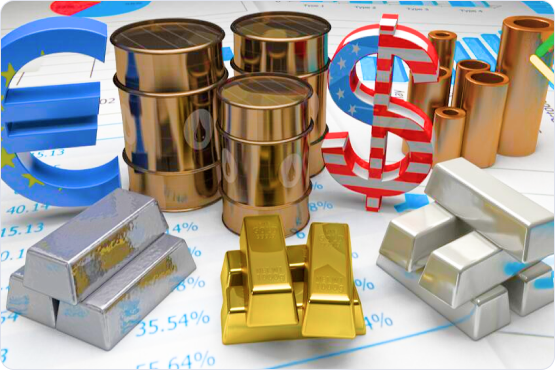
What’s Happening in the Currency Market and How Can You Take Advantage of It?
The U.S. dollar continues to follow its bearish trajectory that began in early 2025, with global markets fixated on a single narrative. The United States, its ballooning debt, and a weakening currency. After years of caution, Moody’s has joined S&P and Fitch in downgrading the U.S. credit rating, becoming the last of the “big three” agencies to revoke the top-tier grade for U.S. government bonds. Has the final pillar of unwavering confidence in American public finances now symbolically fallen?
The dollar under pressure
As expected, such fundamentally significant news triggered an almost immediate reaction in the financial markets. The U.S. dollar weakened across the board, falling against nearly all major currencies. It dropped 0.6% against the Japanese yen to 144.80, its lowest level since May 9. Meanwhile, the euro climbed to 1.1199, the Swiss franc appreciated to 0.8358, and the British pound rose to 1.3297. Gains were also seen in the Australian and New Zealand dollars.*
Trump’s trade policy returns to the spotlight
Beyond monetary data, U.S. politics is once again shaping global currency sentiment. President Donald Trump has reengaged in trade diplomacy, launching talks with the European Union in pursuit of a deal similar to the one recently secured with the United Kingdom. Yet he remains firm: "Tariffs will be imposed on countries that do not negotiate in good faith."
Talks with Japan, however, are reportedly stagnating, largely due to disagreements in the automotive sector. Meanwhile, a newly proposed tax package, projected to increase the federal debt by $3 to $5 trillion over the next decade, has raised further concerns about the long-term fiscal health of the United States.
What are the analysts saying?
Paul Mackel of HSBC sees the downgrade as a long-overdue adjustment, bringing Moody’s in line with other agencies, but warns that it could fuel further bearish sentiment towards the dollar. Similarly, Mahjabeen Zaman of ANZ notes: "Confidence in the U.S. dollar as a safe haven is shaken," a statement that would have been unthinkable from major analysts just a few years ago.
A different picture in Australia
On the other side of the world, Australia's economic landscape looks more stable. Interest rates are expected to be cut to 4.10%, supported by declining inflation. However, Ray Attrill of National Australia Bank urges caution, warning that the market may be overly optimistic about the ability to strike new trade agreements.
Bitcoin: Record levels within reach
While traditional markets struggle to find footing, Bitcoin is telling a different story. The flagship cryptocurrency has broken above $107,000, representing a 44% surge since the April low. With this year’s high of $109,000 now within reach, Bitcoin appears to be regaining its momentum as investors seek alternative stores of value amid fiat currency uncertainty.*
Conclusion
In today’s market, it’s not just about interest rates and credit ratings, it’s about trust. Investors are looking for reassurance that the U.S. government can manage its debt, that trade negotiations yield results, and that central banks maintain transparency. Only under these conditions can the U.S. dollar regain stability.
* Past performance is no guarantee of future results.
